Why Biogrow Fodder Is the Future of Equine Nutrition. Feeding horses with inconsistent, expensive hay is becoming a thing of the past. Today, modern agricultural technology allows farms to grow fresh, living, highly nutritious feed 365 days a year.
Hydroponic fodder represents the most significant advancement in exclusive equine nutrition, providing a living feed that vastly outperforms inconsistent, expensive, and dry traditional hay. Nature dictates that fresh is always best; horses will instinctively choose fresh fodder over any other alternative because they know what is optimal for their bodies, acting essentially like "grass on steroids".
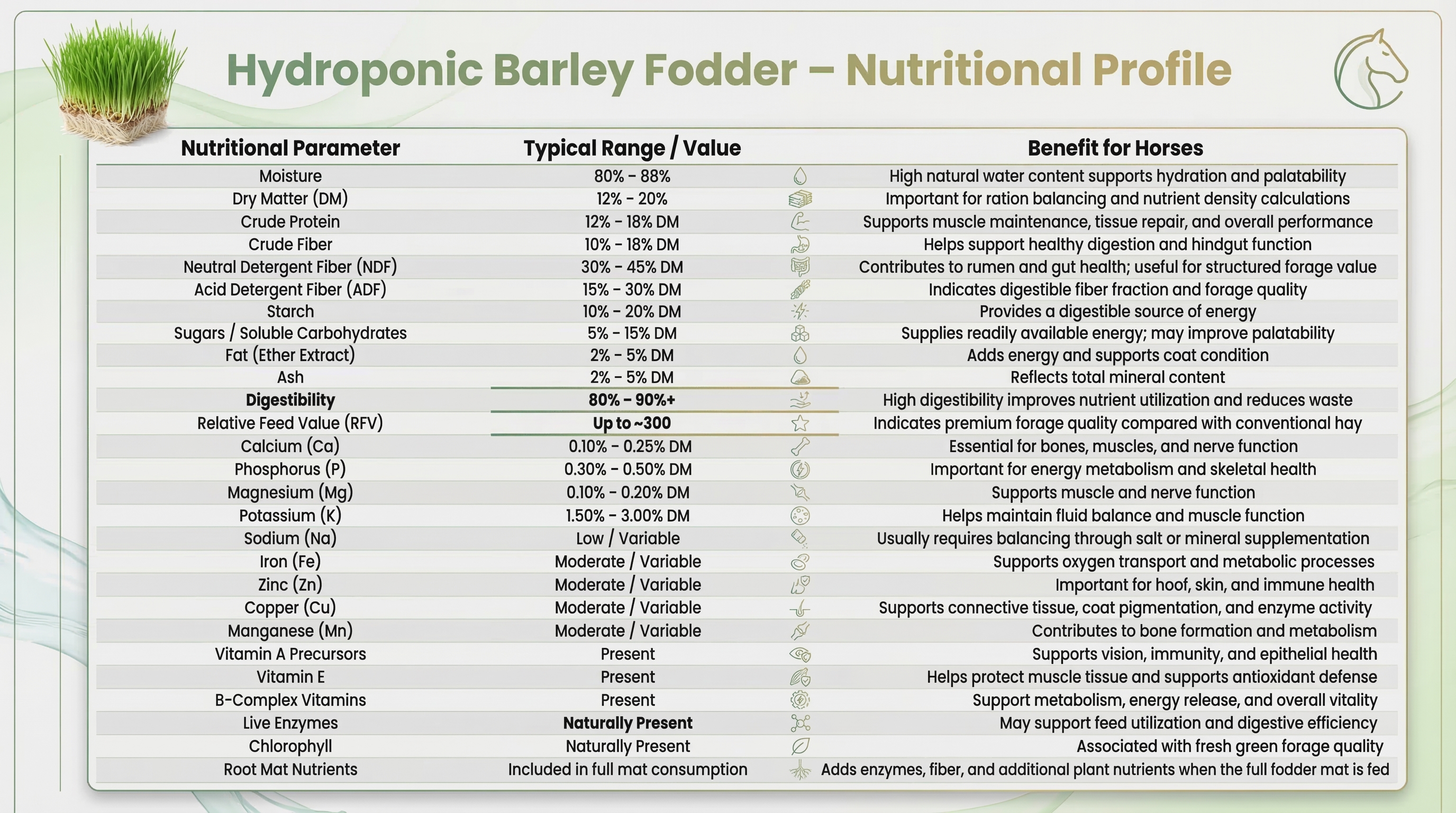
Structurally and biochemically, sprouted hydroponic barley fodder is packed with vital nutrients, vitamins, and minerals essential for equine performance. It reaches a Relative Feed Value (RFV) of approximately 300, whereas traditional hay typically has half or even less than half of that value. One of its most outstanding features is that horses consume the entire block or "biscuit", which includes a root mass exceptionally rich in live enzymes, protein, and starch. Because it is consumed in its entirety, there is absolutely zero waste in the barn.
A horse's digestive system is highly sensitive, and fresh fodder meets this need with a digestibility of around 90%, a figure far superior to traditional hay or grain. This means maximum utilization of every nutrient, preventing undigested feed from passing directly into the manure. This high digestibility and the presence of live enzymes are fundamental for intestinal health; in fact, it has proven crucial in the recovery of racehorses with severe ulcers and lack of appetite, restoring their gastric health and vitality to return to racing and winning.
The inclusion of hydroponic fodder in a horse's daily diet generates clear and rapid physical transformations. It provides excellent hydration, leaves a visibly shinier coat, and improves overall demeanor, keeping horses much happier. Furthermore, it vitally assists in the recovery and avoidance of ailments. Impressive cases have been documented of horses suffering from laminitis and severe weight loss, which, after being fed fresh fodder, managed to recover and return to galloping in just a couple of weeks, vastly exceeding traditional expectations.
From a food purity standpoint, this fodder is grown completely organically and naturally, with no chemicals or Genetically Modified Organisms (GMOs), relying solely on water, lighting, and proper air conditioning. This eliminates the risks associated with dusty or contaminated hay, guaranteeing owners and trainers a pure, consistent nutrition of the exact same premium quality 365 days a year, regardless of the outside weather.
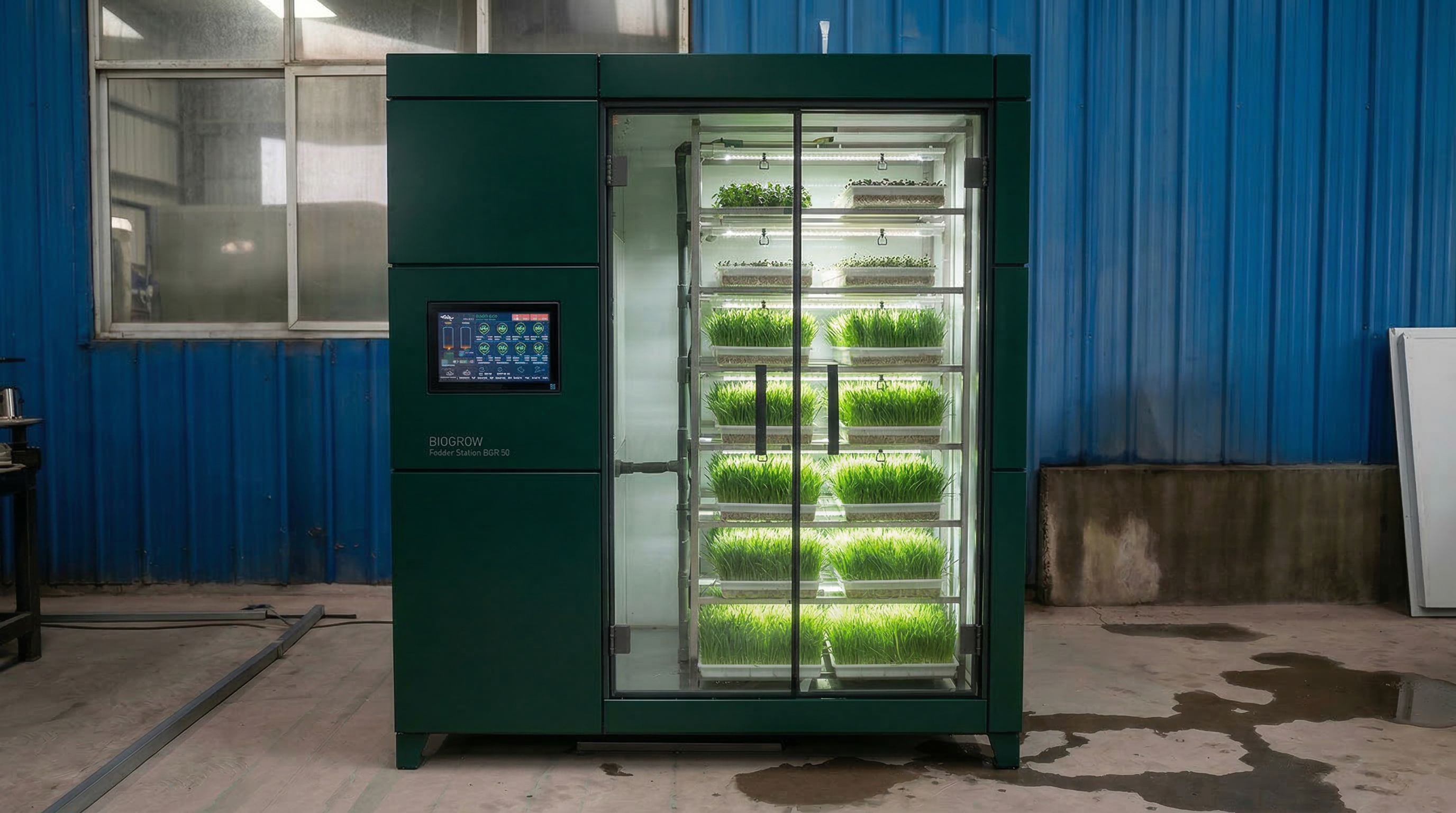
BGR50
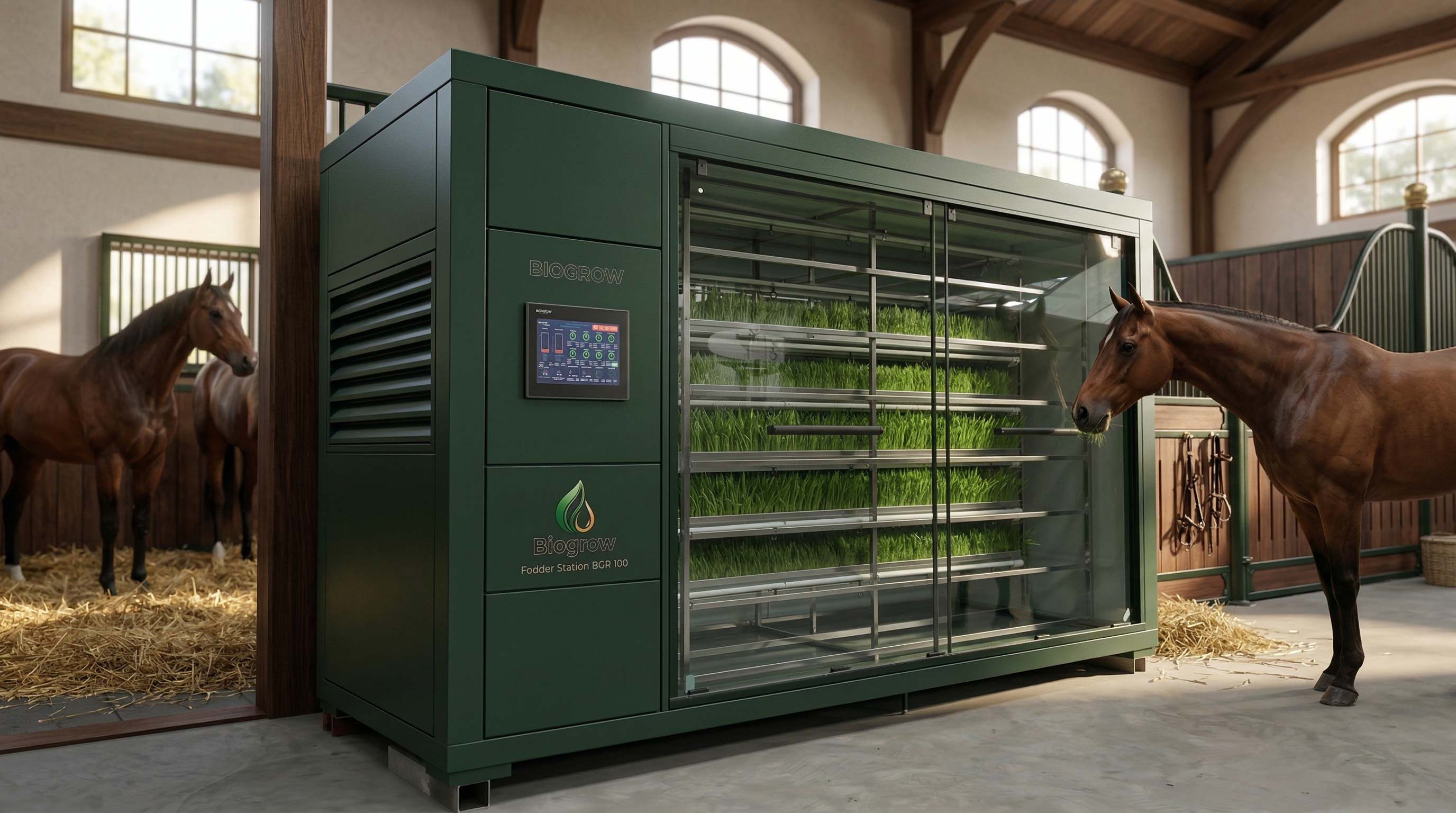
BGR100
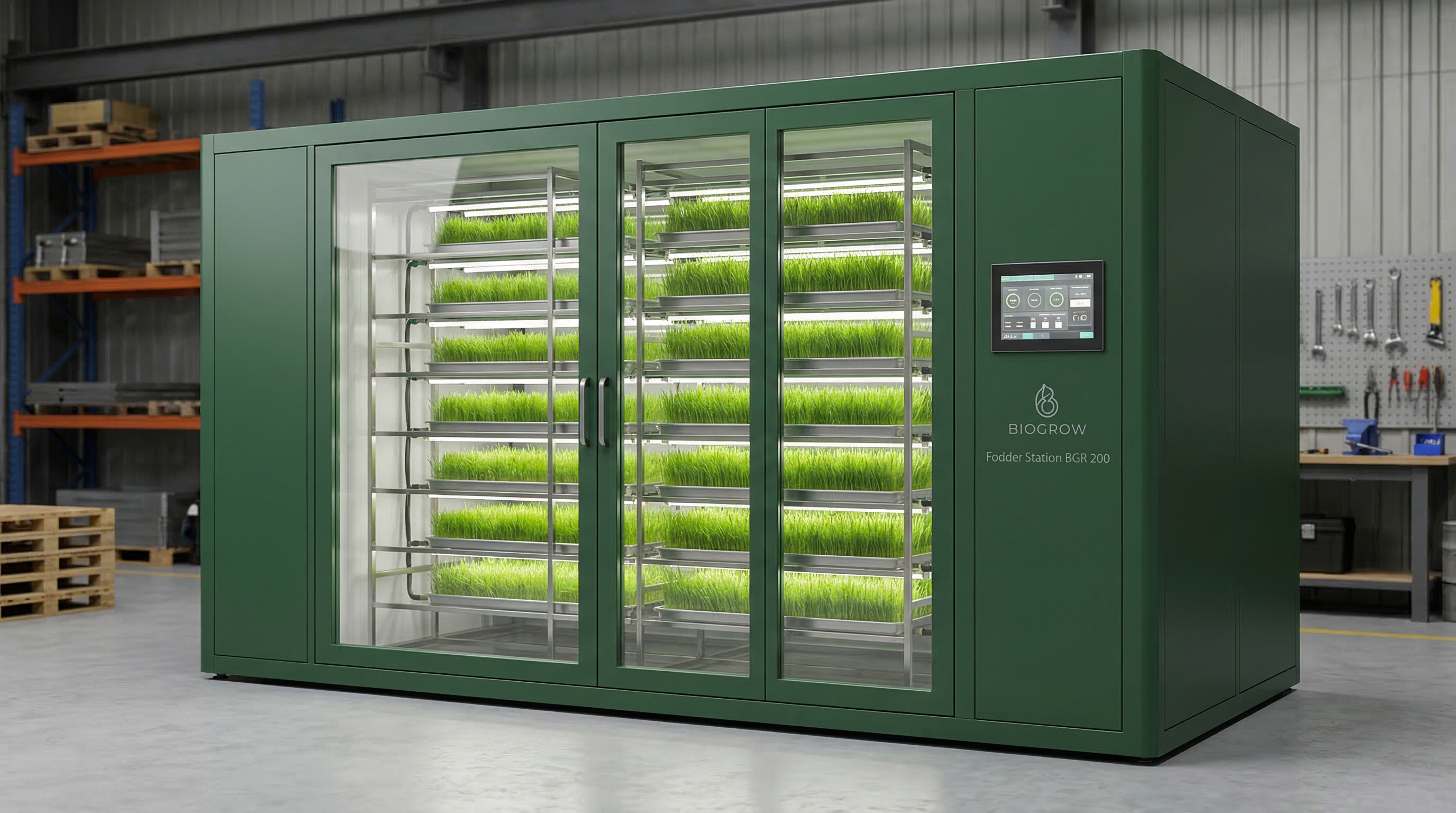
BGR200
Integrating Biogrow Fodder into your feeding program is a smarter, healthier, and more cost-effective choice.
Fresh forage offers significantly greater nutritional value than dry or processed feed. Sprouted hydroponic barley fodder can reach a Relative Feed Value (RFV) of approximately 300, while traditional hay often delivers only half that value, or less. Because it is a fresh, living feed, Biogrow Fodder provides a balanced source of essential nutrients, vitamins, and minerals. Horses consume the entire fodder mat (the "biscuit"), including the root mass, which is rich in live enzymes, protein, and starch.
One of the biggest drawbacks of traditional grains is that a large portion passes through the digestive tract without being fully absorbed. Fresh hydroponic fodder offers digestibility above 90%, allowing horses to utilize far more of what they eat. That means better nutrient absorption, less waste, and a stronger return on every dollar. Owners can feel confident that horses are actually benefiting from what they are fed.
The impact of fresh fodder on horse health is visible quickly. Daily feeding supports muscle recovery, improves hydration, and contributes to a noticeably shinier coat. Documented successes highlight rapid Laminitis recovery and improved energy in racehorses recovering from ulcers and digestive distress, leading to better condition, appetite, and vitality.
The cost of feeding horses with conventional diets continues to rise. A more realistic comparison includes hay plus balanced feed. Producing fresh hydroponic Biogrow Fodder on-farm can cost approximately $0.06 per pound, offering a far more economical way to provide fresh, digestible, nutrient-dense forage.
Advanced fodder systems can operate on an ultra-fast 4-day growth cycle. 1 pound of barley seed can produce up to 6 pounds of fresh fodder. It is also a near zero-waste feeding solution. Unlike hay, which is often trampled and soiled, horses typically consume the entire fresh fodder mat.
Biogrow Fodder is grown naturally, without chemical fertilizers or genetically modified organisms. Its production depends only on water, specialized lighting, and controlled airflow. Hydroponic growing uses a fraction of the water required by conventional agriculture, protecting farmland and supporting clean production.
| Feed Type | Estimated Digestibility | Nutrient Absorption | Relative Feed Value (RFV) |
|---|---|---|---|
| Biogrow Fodder (Fresh) | Over 90% | Very High | ~300 |
| Traditional Dry Hay | Moderate / Low | Moderate | ~150 or less |
| Traditional Grain | Moderate (with losses) | Moderate | Variable |
| Feeding Program | Cost per Pound | Daily Intake | Estimated Daily Cost | Estimated Annual Cost |
|---|---|---|---|---|
| Biogrow Fodder | $0.06 | 34 lbs | $2.04 | ~$744.60 |
| Conventional Balanced Feed | $0.86 | 34 lbs | $29.24 | ~$10,672.60 |
| Comparison | Savings per Pound | Daily Savings | Annual Savings per Horse |
|---|---|---|---|
| Biogrow vs. Conventional | $0.80 | $27.20 | ~$9,928.00 |
Biogrow Fodder is more than just feed. It is a modern nutritional solution designed to improve horse health, optimize feed efficiency, reduce waste, and lower long-term feeding costs. For horse owners, trainers, breeders, and equine facilities looking for a more reliable and sustainable way to feed, fresh hydroponic fodder represents the future.